There is a story I love telling, and I told it not long ago to a group of women in the profession.
The organ player for the St. Louis Cardinals died. If you’re from St. Louis, you know exactly who I mean (for those not from St. Louis, his name was Ernie Hayes and he played organ for the Cardinals for 40 seasons). Hayes played the organ before, during, and after every single St. Louis Cardinals baseball game. Everybody knew and loved him. And when he died, his family came to us.
We did something we had never done before.
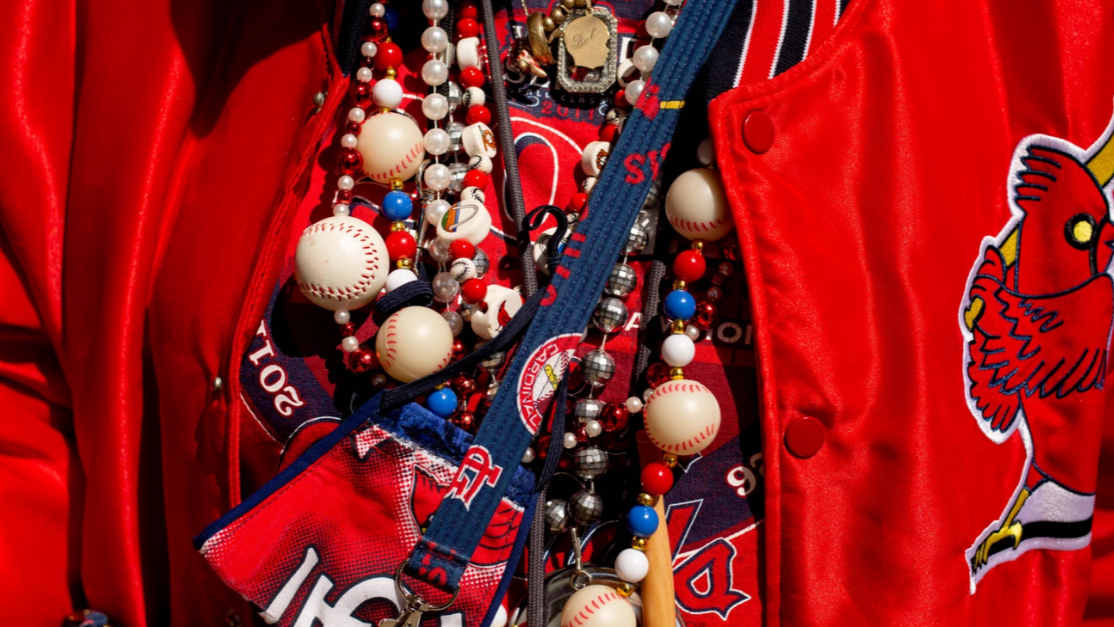
Every single member of our Baue team wore their favorite Cardinals jersey or Cardinals shirt to the funeral. We personalized the experience for a family who was grieving a man whose whole life was wrapped up in that ballpark, that team, that sound.
It was one of the most meaningful funerals I’ve ever been part of.
And– it broke every dress and appearance standard we had.
“That is leadership: knowing your standards so completely that you can set them aside with intention, for exactly the right reason, at exactly the right moment.”
You Have to Know the Rules Before You Can Break Them
Let me be clear: we did not wear Cardinals jerseys because we didn’t have standards. We wore them because we had standards so deeply embedded in our culture that every person on our team understood, without question, what we stood for and why.
Our mission was to touch the hearts of those we serve. Everything else, every policy, every guideline, every protocol, served that mission. When it didn’t serve that mission, we set the policy aside.
Another example:
The motorcycle man. He was part of a motorcycle group, and they had their own symbols, their own identity. His family wanted everything black. Our celebrant wore a black leather motorcycle jacket. His motorcycle was on display inside. We built the whole experience around who he was, not around what was familiar to us.
And yet another:
A little girl died. I won’t dwell there long, because some losses are too sacred for long words. But her favorite color was pink, and she loved tutus. Every man on our team wore a pink tie and all of the women put on our pink blouses, the ones we saved for October breast cancer awareness month, and we wore some tutu wristbands. Small things, but exactly the right things. That family will never forget that day, and neither will I.
Each time, the family knew: these people see our person. They are not processing a death, they are honoring a life.
What This Teaches You About Leadership
Here is the insight I want you to carry out of this, because it applies far beyond the arrangement room.
The leaders who make the deepest impact are the ones who have mastered the fundamentals so thoroughly that they can adapt without losing their footing. They are not improvising because they don’t know the rules, instead they are adapting because they know the rules and they know what the rules are for.
Early in your career, you learn the standard.
You learn how to walk a family to the graveside, how to position the casket and stand beside someone who is in the worst pain of their life. You learn it until it becomes instinct. That is where your confidence comes from, that mastery is the foundation.
But mastery is not rigidity. A leader who has genuinely internalized her values does not need to consult a policy manual every time something unusual happens. She asks one question: What does this family need? And then she finds a way to give it.
“The best funeral directors I have ever known don’t just run funerals. They see people. That is a leadership skill, and it can be taught and developed.”
You Can Teach This to Your Team
If you are in a management role, or stepping toward one, this is something you can build into your team culture starting today.
Start with your mission and your values. If you don’t have them written down, build them with your team and get them on paper. At Baue’s, every employee carried a card in their pocket with our mission, our purpose, our core values, and our service commitments. We talked about them at every staff meeting, connected every decision, training, and hard conversation back to those words. When your team lives in the why of what you do, they don’t need to be told what to do in every situation. They already know.
Second, give them permission to be human. Share stories like the Cardinals jersey funeral in your team meetings. Tell them about the little girl in pink. Let them see that you, as their leader, are not afraid to step outside the ordinary when something truly matters. That permission travels.
Third, debrief the good ones. After a service that was especially meaningful, gather your team and talk through it. What did we do? Why did it matter? What would we do again? This is how you build a culture that gets better and better at the thing this profession is ultimately about: making people feel that their person was seen, loved, and honored.
A Word for Those Just Starting Out
You are going to spend years learning the fundamentals, and I want you to lean into every single one of them. Do not rush past this season. The confidence you will carry for the rest of your career, the kind that holds steady when a family is falling apart in front of you, is built right here, in the early years, when you are doing the basics over and over until they become second nature.
But don’t mistake the fundamentals for the ceiling. They are the floor. What you build on top of them, the relationships, the instincts, the ability to read a family and respond to who they actually are, that is where the real artistry of this work lives.
You will have your own Cardinals jersey moments. You will stand beside a family and realize that the best thing you can do for them has nothing to do with procedure. It has everything to do with presence, and paying attention, and being willing to let their person’s story lead.
That is the kind of funeral director, the kind of leader, this profession needs more of. I hope you will be one of them.